
South Jordan Court Docket Searches
First figure out where the record started. A case may have begun in the old South Jordan Justice Court before everything moved. The current South Jordan Courts page confirms the transfer. Prior and new cases went to Salt Lake County Justice Court. For the docket itself, Utah Courts Xchange is the paid public case-history search. The statewide calendar shows hearing settings. Parties with their own cases get free access through MyCase, including filings, payments, and notices.
When you sit down to search, keep the right details close. Keep the original citation or case number ready. Also note the filed name and the approximate date. Bring the issuing agency too, because a transferred file can still carry its old city identity even though the county clerk now manages it. And if nothing comes back, look at the cause. It may be a location filter, a delayed entry, older data, or restricted access.
- Confirm that the document names the former South Jordan Justice Court.
- Retain the original citation or case number and all deadline notices.
- Search Xchange by number or filed name, using Justice Court and relevant location filters.
- Check the Utah calendar for the current county setting.
- Call Salt Lake County Justice Court when the transferred identity or deadline is unclear.
South Jordan Court Closure
The closure date is firm. South Jordan Justice Court closed permanently. The date was July 1, 2026, and the city stopped taking court filings or payments at any local counter. One caution, though. That transfer does not make every South Jordan matter a county Justice Court case. District, juvenile, and federal cases still follow their own separate court routes. The official closure notice lays out the transfer. It also warns against a dead city payment path.
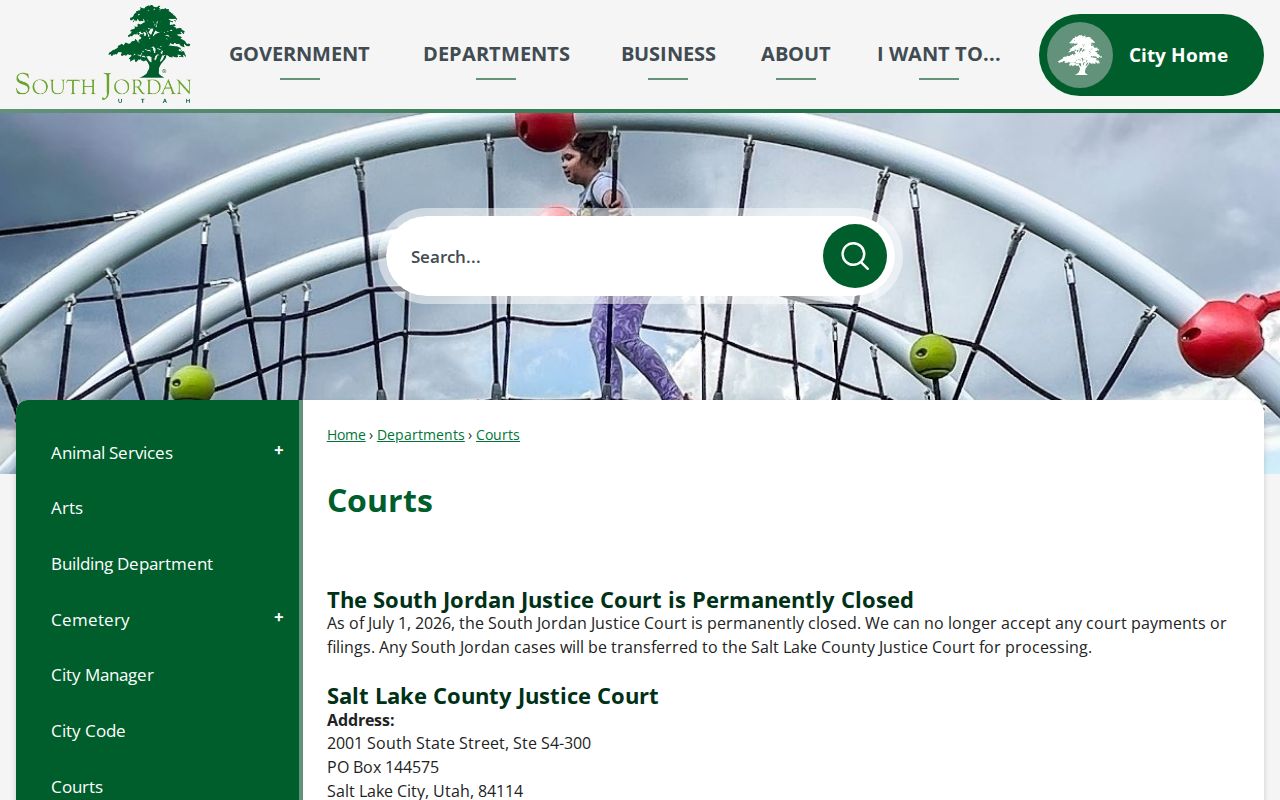
After a South Jordan court closure, the official notice controls. Rely on it first, not older city pages, saved phone numbers, or stale payment instructions.
Inside the South Jordan Municipal Court
After July 1, 2026, no South Jordan municipal Justice Court is operating. The city court once handled limited-jurisdiction work. That meant local traffic, infractions, lower-level misdemeanors, code matters, and whatever else the law assigned it. City-council materials describe a traffic-heavy caseload, with non-traffic cases covering retail theft, DUI, assaults, and code violations. That history helps explain old records. It does not mean a current city docket exists.
The court that received everything is Salt Lake County Justice Court. It sits at 2001 S State Street, Suite S4-300, Salt Lake City, UT 84114. Call 385-468-8200, fax 385-468-8223, or email jcsaltlakeco@utcourts.gov. Published weekday hours run 8 a.m. to 5 p.m. There is a closure from noon to 1 p.m. When old city details conflict, the county contact page wins.
Transferred South Jordan Court Records
A transfer moves a record. It does not erase where the file came from. So when you contact the county clerk, hand over the original South Jordan case or citation number, the name as filed, the issuing agency, the approximate filing date, and exactly which record you need. Xchange may label the case differently than you expect. If so, ask the clerk to confirm the current number or location label.
| Item to preserve | Why it matters after transfer |
|---|---|
| Old citation number | Connects the inquiry to the original city matter |
| Old case number | Helps the county clerk locate retained history |
| Issuing agency | Distinguishes a court citation from another city record |
| Filed name and date | Supports a narrowed Xchange or clerk search |
| Notices and receipts | Preserve dates and prior actions during routing |
A closed counter does not mean the South Jordan case number goes away. Keep both the original South Jordan reference and any county reference the clerk gives you, and never invent a new identifier or drop the city.
Finding South Jordan Court Dates
The Utah statewide calendar is flexible. It searches by case number, party, judge, attorney, date, and location. For an older South Jordan matter, start with the details shown on the notice. Then confirm the current county location. A calendar row shows plenty. It can list date, time, a virtual-hearing indicator, court type, judge, setting type, case number, and case type. Utah Courts updates calendars on weekdays around 5:30 a.m.
| Date | The currently posted hearing day for the transferred case. |
|---|---|
| Time | The listed call or individual setting time. |
| Location | Salt Lake County Justice Court or the place stated by the current notice. |
| Judge | The judicial officer assigned after routing. |
| Setting type | Arraignment, pretrial, review, evidentiary hearing, trial, or another event. |
A calendar row is only a scheduled event, never proof of a judgment or dismissal. Check again close to the date, since resets, continuances, mode changes, and new notices can replace an earlier listing.
South Jordan County Counter Rules
Watch the clock at the receiving county court. Payments stop at 4:30 p.m., even though the office stays open until 5 p.m. The counter also closes from noon to 1 p.m. Do not head to the old city counter. Do not treat the general closing time as the payment cutoff.
Before you travel or mail anything, call 385-468-8200 to confirm the right submission method and the balance owed. County Justice Court publishes phone, email, fax, postal, and counter contacts. Your task determines which one is valid. Staff can explain procedure and routing. They cannot choose a plea, interpret what payment means legally, or promise that payment clears every related consequence. Keep your confirmations and receipts with the South Jordan case papers.
South Jordan Traffic Ticket Lookups
South Jordan traffic tickets once filled the city Justice Court calendar. They now sit with Salt Lake County Justice Court. Start with the citation itself. It names the issuing agency, the court, the case number, your deadline, and your choices. From there, run an Xchange docket search with the number scoped to Justice Court. Glance at the calendar for a hearing date. Confirm any transfer details with the county clerk.
Paying and fighting a ticket are separate paths, and the old city office takes no payments now. The county payment counter closes at 4:30 p.m. sharp. A parking notice from an administrative system is not a court case. It becomes one only when that system says so. For how citations differ across Salt Lake County, see Salt Lake County traffic court records.
South Jordan deadline: Court closure does not cancel the date on an old citation. Contact the receiving county clerk when the printed route is obsolete.
South Jordan GRAMA Records
City hall still answers records requests under Utah's GRAMA law. The Government Records Access and Management Act covers city administrative records, not judicial case files. That distinction matters. Police and department records may sit with South Jordan. The transferred court history and filings belong to Salt Lake County Justice Court under judiciary access rules.
So pick your channel by what you actually need. The official South Jordan GRAMA form lists its request fields and its response-time language.
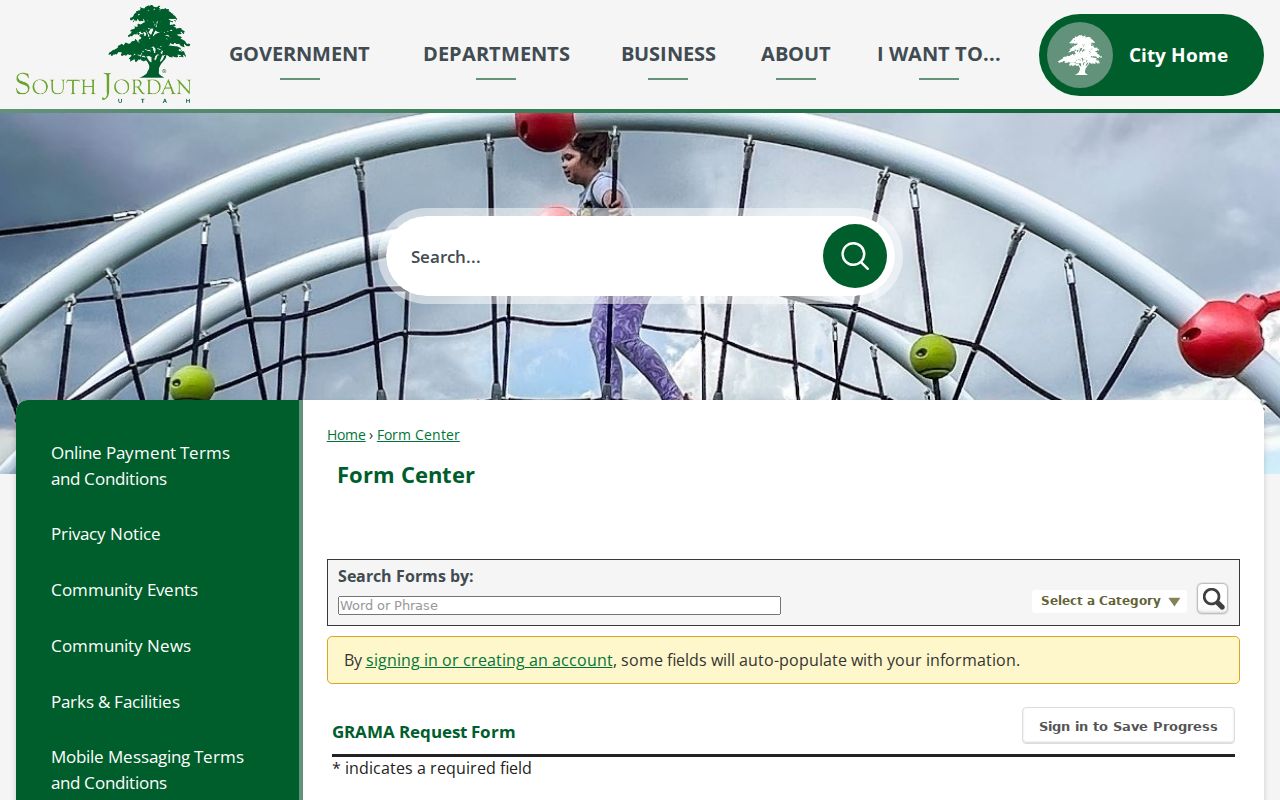
The form allows a court case number. That detail never turns the city form into the county court's own process for requesting a judicial record.
How South Jordan Cases Reach the County
The 2026 transfer reshaped the city's docket. South Jordan's former Justice Court workload now sits with Salt Lake County Justice Court. Serious matters travel their usual routes instead. Felonies, Class A misdemeanors, and major civil, domestic, and probate cases belong to Third District Court, while a Justice Court appeal can open a distinct District Court trial de novo under Utah Rule of Criminal Procedure 38.
Docket flow: Former South Jordan Justice Court › Salt Lake County Justice Court › Third District Court
This line describes routing only. Nothing here folds every city matter into District Court. Add a search level just when the case type or its history supports one. The Salt Lake County court docket overview lays out the state, county, municipal, juvenile, and federal layers that sit above and beside these courts.
South Jordan Record Request Fields
The city GRAMA form wants a lot. Expect fields for your first and last name, the agency or department, a police case number, a court case number, a description, the event location, mailing and contact details, subject-of-record status, and request specifics. A strong request names the city department and describes the records with a useful date range. Skip private details the request does not need.
The form promises answers in ten business days. Qualifying public-benefit requests get five business days instead. Denial citation and appeal procedures appear there too, all belonging to the city GRAMA channel rather than the courts. Those timelines never govern a court record under UCJA Rule 4-202.04. For a transferred court document, start differently. Name the county Justice Court, the old South Jordan number, the caption, a date range, the paper you want, and whether you want inspection or a copy.
South Jordan Court Docket History
South Jordan holds fifth place among Salt Lake County's incorporated cities in the official 2020 Census table. Its count: 77,487 residents. Population is not a filing count. Old city-council claims that traffic drove the local caseload are historic statements, not a picture of the county court's mix after the transfer.
The Utah judiciary data dashboard is the better source. It filters by court type, district, county, location, case type, and fiscal year back to 2010. Use it for historic South Jordan trends. Record your filters and retrieval date whenever you cite a result. Do not add old city filings to current county numbers. The dashboard's treatment of the transfer may not support that math.
Pending cases, annual filings, and calendar settings measure different things. One case can generate many settings, so a day's calendar tells you nothing about docket volume. A filing total counts new matters in a period. Pending inventory is a snapshot of open matters. Dispositions measure outcomes, and a calendar records events that can repeat for a single case. The closure adds another break in the series. Current county activity should not carry the South Jordan label.
A sound statistical note names the location, court type, case type, fiscal year, metric, and retrieval date. Aggregates never answer for one case. For a transferred matter, search the preserved citation or case number itself.
Who Can See South Jordan Court Records
Utah court rules govern who sees a judicial record. UCJA Rule 4-202.02 starts from public availability and then sorts material into private, protected, sealed, and restricted classes. Rule 4-202.04 sends public requests in writing to the clerk holding the record and demands a valid entitlement or court process for anything nonpublic. City administrative records go the GRAMA route instead.
South Jordan access boundary: Transfer does not make sealed, expunged, juvenile, protected domestic, or private personal information public.
You have real options for access. Xchange sells public history, the calendar shows dates, MyCase opens your own linked file, a courthouse terminal works where offered, and a written request to the county clerk covers the rest. Phone, email, fax, mail, and the counter each suit different tasks. Confirm your channel first. An empty result page can mean a wrong location, an old identifier, slow transfer indexing, or a lawful restriction. It never proves the record is absent.