
Salt Lake County Criminal Docket Searches
Utah Courts Xchange is the main remote tool for a Salt Lake County docket search. It covers public case histories from District and Justice Courts alike. Pick the court level first. Felonies and specified Class A misdemeanors land in Third District Court. Most Class B and C misdemeanors, infractions, and traffic tickets belong to a county or city Justice Court. A broad search can hit the portal's 500-result limit. So bring a case number, citation number, name as filed, case type, and likely location.
Salt Lake County offers several other channels too. Parties can use MyCase for their own case and papers. Everyone else can try paid Xchange or the separate court calendar. A free terminal sits at many District Court sites. The right clerk's counter or phone line also works. So does a written request. Mail, email, and fax options depend on the holding court.
- Select District Court, Justice Court, or both in Xchange.
- Limit scope to Salt Lake County or the known court.
- Search by case number, citation, or name as filed.
- Use case type and dates to narrow common names.
- Open the history, then ask the holding clerk for unavailable public papers.
Choose the Salt Lake Criminal Court
Court level decides who keeps the docket. The Utah District Court holds general trial jurisdiction. Its Salt Lake County criminal caseload covers felonies plus specified Class A misdemeanors. The Utah Justice Court has limited jurisdiction. It covers most Class B and C misdemeanors and infractions. Municipal Justice Courts keep their own city cases. There is no single countywide clerk system for all of them.
| Court path | Typical matters | Keeper |
|---|---|---|
| Third District Court | Felonies and specified Class A cases | District Court clerk |
| County Justice Court | Covered-area lower offenses | County Justice clerk |
| City Justice Court | City-filed lower offenses | City court clerk |
Searching the wrong court can return nothing even when a public case exists. Check the citation, the charging paper, or the Salt Lake County court directory before giving up.
Criminal Dockets: What They Show
A Salt Lake County criminal case history is a chronological index. It is not just a charge list. Through Xchange you may see court location, case type, filing date, party role, and judge. Attorney, prosecuting agency, proceedings, document titles, charges, pleas, and dispositions may appear too. Case numbers carry a clue as well. The first two digits generally reflect the filing year. That number is not unique statewide, though. So keep the court and location with anything you save.
| Case identity | Type, number such as 26XXXXXXXX, filing date, county, and court |
|---|---|
| Charge detail | Description, class, citation, violation date, and agency where supplied |
| Events | Arraignment, pretrial, review, evidence hearing, trial, and other proceedings |
| Plea and result | Plea, judgment, disposition, sentence, or transfer |
| Documents | Title, date, and public-availability indicator |
One line rarely tells the whole story. A charge does not prove guilt, and a calendar setting does not prove the event occurred.
Matheson Criminal Docket Access
Salt Lake City's main District Court home is the Matheson Courthouse. Its official court directory entry lists current contacts for each division. For a criminal docket question, call 801-238-7321; the general line is 801-238-7300. The clerk can point you to a public terminal. Staff can also explain a record's status or describe the proper written request. Staff handle access questions but cannot give legal advice.
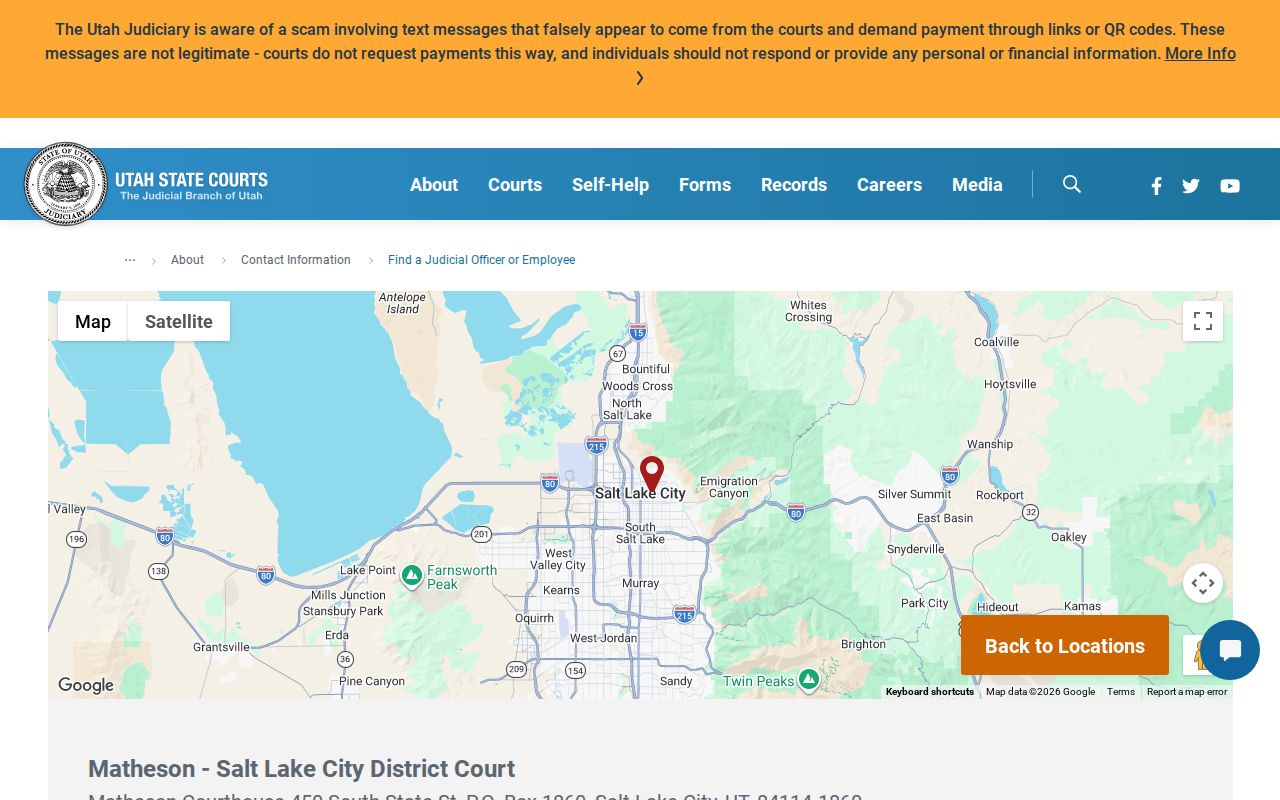
The directory listing shows why division routing matters. Criminal, civil, probate, and other functions each have distinct contacts inside the same courthouse.
Matheson Criminal Division
450 S State Street
P.O. Box 1860
Salt Lake City, UT 84114-1860
801-238-7321
Criminal Case Stages on the Docket
The order of entries varies. Still, a Salt Lake County case history often traces a familiar path. A prosecutor files or opens the case. The court sets an arraignment. Later entries may show pretrial conferences, motions, evidence hearings, a plea, or trial. A disposition then resolves each charge in a stated way. Sentencing or review entries can follow a plea or verdict.
Salt Lake County docket flow: Filing › Arraignment › Pretrial › Plea or Trial › Disposition › Sentencing
- Setting
- A scheduled event, not proof it was held.
- Continuance
- An order moving an event to a later date.
- Disposition
- The procedural result for a case or charge.
- Vacated
- An earlier order or setting was set aside.
A code alone can mislead without the order behind it. Compare the history against the judgment and any public sentencing entry.
Salt Lake Criminal Settings Versus Results
The Utah Courts calendar search finds a setting by case, party, or judge. Attorney, date, and location work as search terms too. It may also list time, appearance mode, judge, setting type, and case type. That helps confirm an upcoming hearing. Still, the calendar is not the final Salt Lake County criminal record.
Once the date passes, go back to Xchange or the clerk-held history. A reset can move a setting, and a cancellation can remove it. A later entry or signed order is the better source for what actually happened. If a date looks wrong, contact the court rather than trusting a saved result. The Salt Lake County court schedule page has more calendar detail.
Salt Lake County Criminal Docket Courts
The Third District Court clerk holds Salt Lake County District criminal files. County Justice Court cases, including matters from assigned communities, sit with that court's own clerk. One change is coming. After July 1, 2026, transferred South Jordan Justice Court cases route through Salt Lake County Justice Court. City clerks still keep their own municipal cases. A transfer or appeal starts a new trail.
You can reach the county Justice Court at 2001 S State Street, Suite S4-300, Salt Lake City. Call 385-468-8200, fax 385-468-8223, or email jcsaltlakeco@utcourts.gov. Hours run weekdays 8 a.m. to 5 p.m. The counter closes noon to 1 p.m., and payments stop at 4:30 p.m. Confirm details on the official contact page.
Federal charges follow a different route entirely. Those cases use the U.S. District Court for the District of Utah and PACER. No Xchange lookup applies. No Salt Lake County clerk handles them.
Salt Lake Docket Documents After Search
Xchange is a starting point, not a full archive. Utah Courts treats electronic District documents filed since July 1, 2010 as its modern public layer. Older files and Justice Court conversion histories vary case by case. Some papers never made it online at all. When a public document does appear there, it costs $1 under the posted Xchange fee schedule.
If the paper you need is not online, figure out which clerk holds it, then use the Utah court record request process. The form lets you ask for inspection or copies. Inspection alone can save you the copy fee. Follow whatever mailing or delivery directions that particular court gives. A District request sent to a county Justice Court goes nowhere, even though both courts sit in Salt Lake County.
Two other tools serve different needs. MyCase gives parties free access to their own linked case. Utah Courts District Court eFiling is different again. It files papers. It is not a public name-search system.
Access Rules for Criminal Dockets
Criminal dockets in Utah follow court-specific access rules. UCJA Rule 4-202.02 sorts records into public, private, protected, sealed, and restricted classes. Rule 4-202.03 says who may inspect each class. County or police administrative files can fall under GRAMA instead. GRAMA still cannot substitute for court rules on court records.
Salt Lake County access boundaries:
Juvenile cases are limited under Utah Code 78A-6-209.
Sealed and expunged indexes face limits under UCJA Rule 4-205.
Nonpublic material requires a valid entitlement or court process.
Public access does not erase privacy duties. Skip republishing birth dates, addresses, victim data, account numbers, and other sensitive identifiers pulled from a criminal docket.
Matheson Access Changed in 2026
Heading to the Matheson Courthouse for Salt Lake County criminal docket work now takes a parking plan. The judiciary's parking notice explains the change. The underground garage closed to public parking on January 1, 2026, and the notice points visitors to nearby lots and transit options.
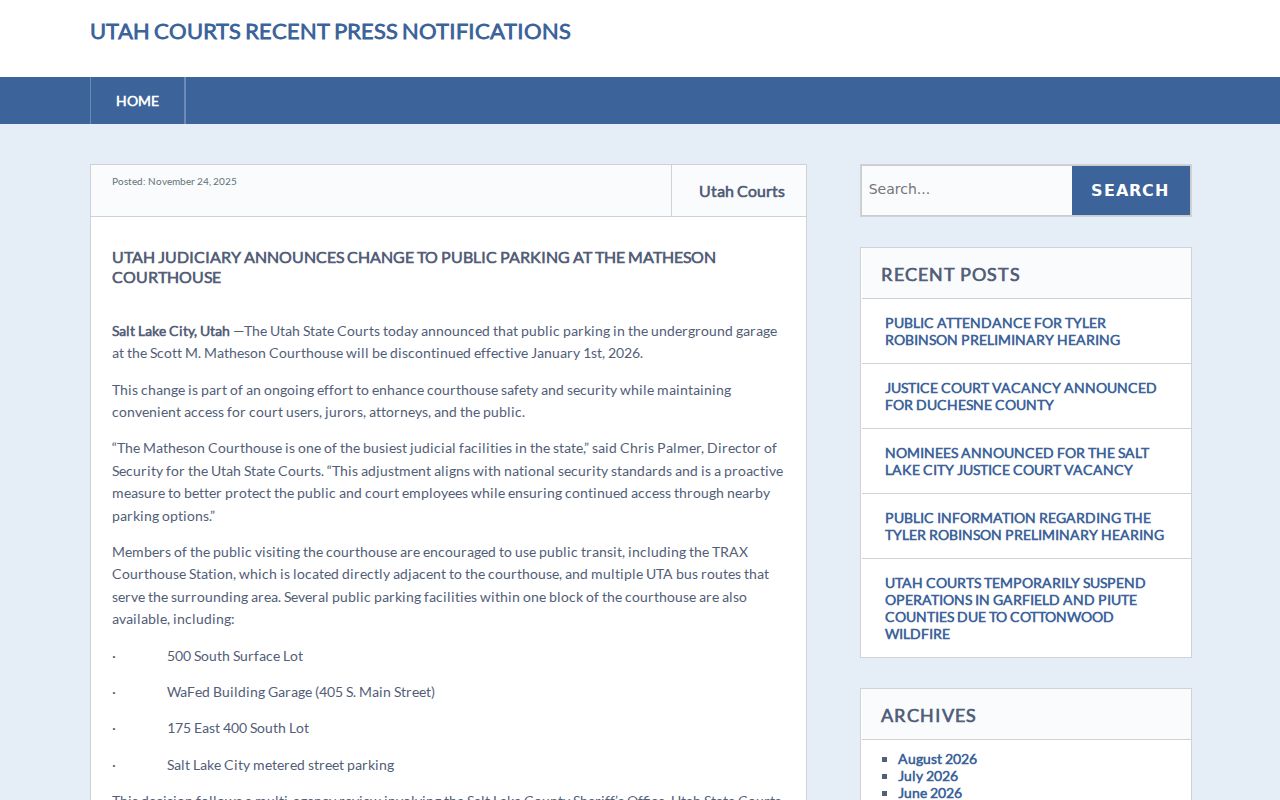
Why does parking matter here? When Xchange lacks a record, a terminal visit or clerk window at the courthouse is your next move. The official Salt Lake City Courts page shows a separate local front door at the John L. Baxter Courthouse, which handles its own matters apart from the Matheson.
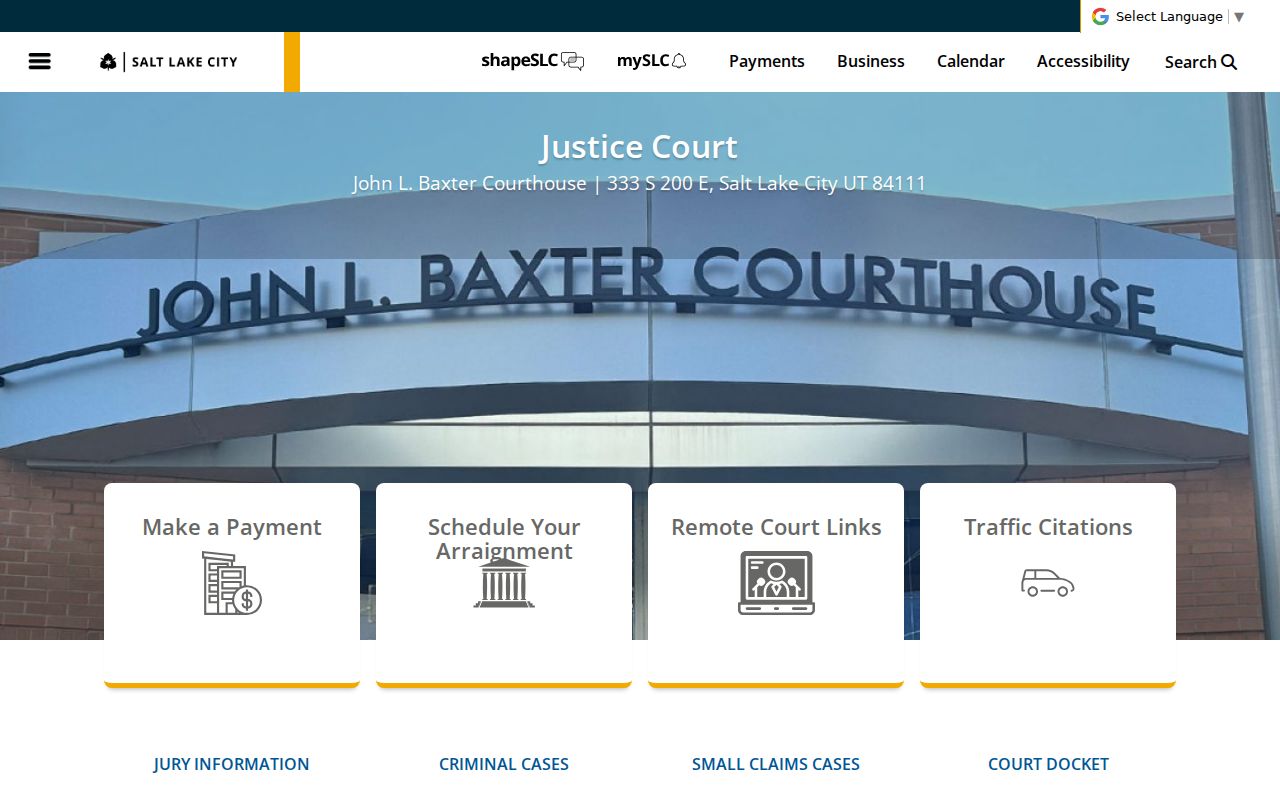
Use the city route for Salt Lake City Justice cases and Matheson for District Court. Sitting close together does not make the two records interchangeable.